
30th Anniversary of the FNHRDCQ | Logos and Visual Identity
A Visual Identity Told by Those Who Created It
As the FNHRDCQ celebrates 30 years of supporting employment, training, and education across Quebec, we are also reflecting on how our visual identity has evolved alongside our mission and the communities we serve.
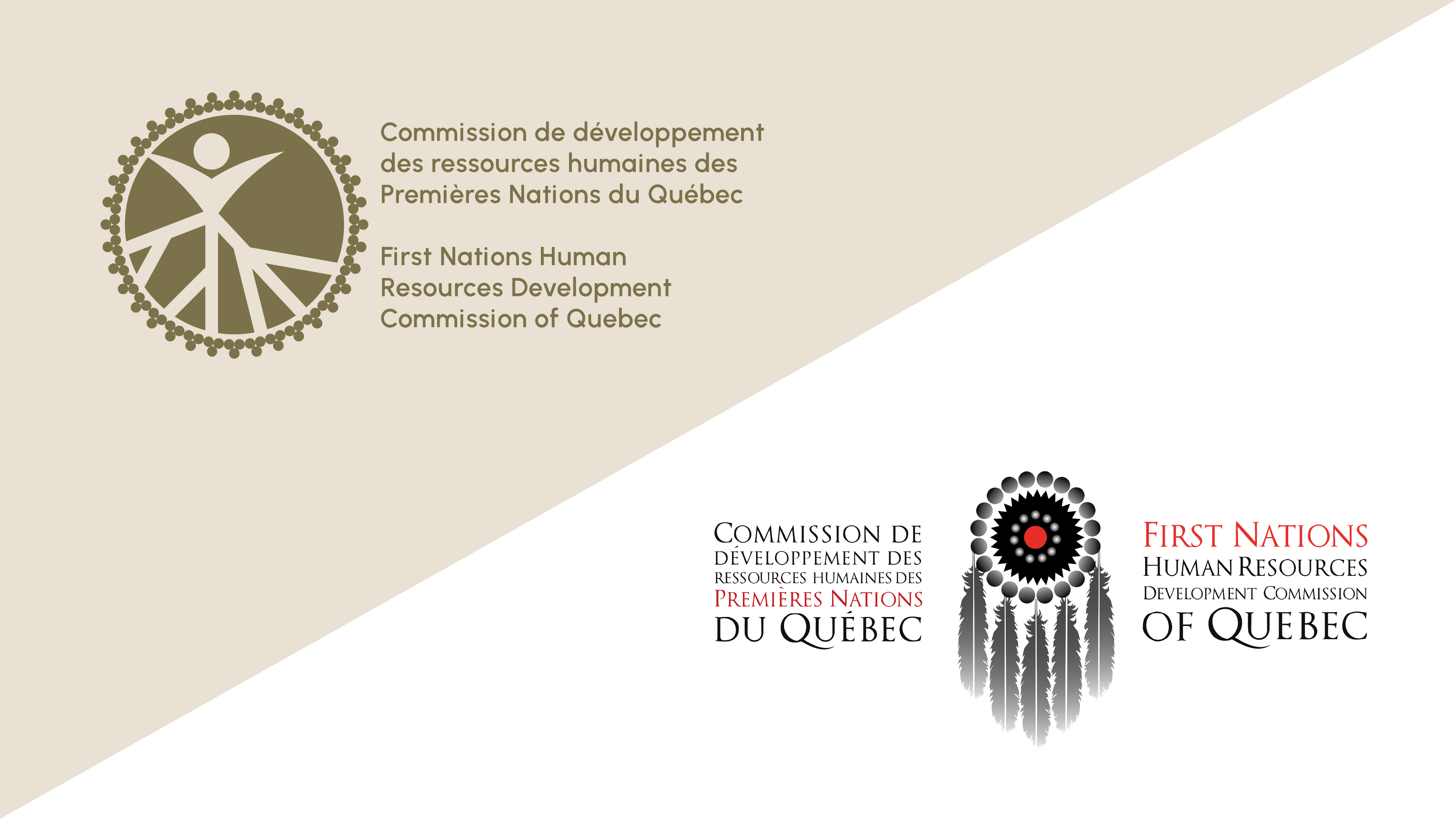
FNHRDCQ logos through the years
A logo is not just an image. It is a point of reference. It reflects a way of working. It captures a vision. As part of the 30th anniversary, we are giving a voice to the people who designed our visual identities: what each logo represented in its time, and what it still expresses today.
The First Logo — Marcel Tessier
We had the opportunity to speak with Marcel Tessier, designer of the FNHRDCQ’s first logo. Here is the idea behind that first visual identity.
At its conception, the logo reflects the holistic and collaborative foundation of the FNHRDCQ. Inspired by the medicine wheel and the dreamcatcher, it reflects the FNHRDCQ’s understanding of each Indigenous community’s unique identity, needs, and approaches to human resources challenges.
The central red circle symbolizes community well-being, surrounded by the eleven circles (Indigenous Nations of Quebec) and the twenty-one circles (local community organizations) that support them. The dynamic energy connecting between the inner and outer circles represents collaboration and exchange, while five feathers symbolize the guiding principles upon which the initiative was founded.
My contribution to its creation was not only in the design itself, but also the consultation with FNHRDCQ team members such as Mario Dagenais, Diane Joannette and the executive committee, ensuring that the visual identity reflected the cultural and holistic principles of the Commission in its earliest days.
An example of an early approach involved the image of a tree, intended to symbolize grassroots development, growth, and community-driven initiatives, with fruit representing outcomes and benefits. While meaningful, this imagery did not fully capture the cultural grounding we were seeking to express.

The former FNHRDCQ logo, designed by Marcel Tessier
For 30 years, the Commission’s visual identity has followed the same path as its services: it evolves, it adapts, and it remains true to what brings us together. Speaking about a logo also means speaking about history and continuity.
The Current Logo — Terry Randy Awashish
Over the years, the logo has evolved. We were fortunate to have Terry Randy Awashish design the current logo. Here is his description and the idea that guided him.
The logo represents traditional beadwork. The small circles come together to form a larger circle, echoing the outline often seen in beadwork. This speaks to the importance of creating and maintaining strong relationships between peoples.
The figure inside the circle is a motif found in moccasin or clothing embroidery. The converging lines represent the roots of a tree and symbolize where we come from and the notion of family.
The seven lines or roots also evoke the seven directions of a person: East, South, West, North, Sky, Earth, and the Person themself. The figure represents both the clientele and the employees of the FNHRDCQ. The composition suggests that it is looking ahead — toward the future.
The typography completes the idea of beadwork that adorns earrings or barrettes.
Terry has a unique way of presenting the design of this logo. Like the logo itself, every line was created with intention, to respectfully represent the traditions of First Nations and Inuit communities.
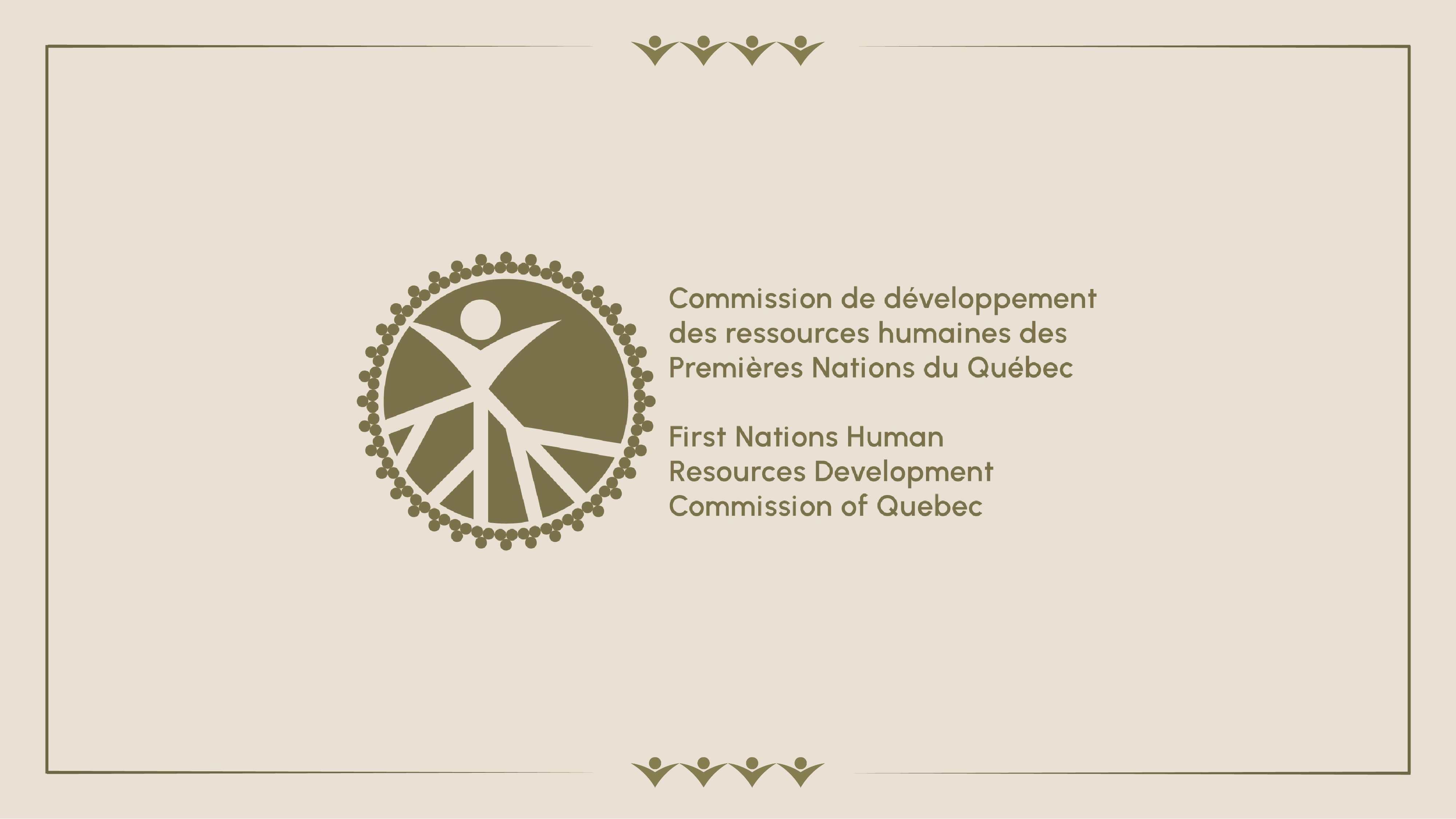
The current FNHRDCQ logo, designed by Terry Randy Awashish
What stands out is the consistency between both approaches. The former logo emphasizes interconnection and well-being. The current one highlights rootedness, family, and a forward-looking vision. Two eras, one shared intention.
Thank you to Marcel Tessier and Terry Randy Awashish for sharing the meaning behind their creations. As part of the 30th anniversary, we will continue to highlight the stories, people, and moments that have shaped the FNHRDCQ.
Text about the former logo: Marcel Tessier
Text about the current logo: Terry Randy Awashish